
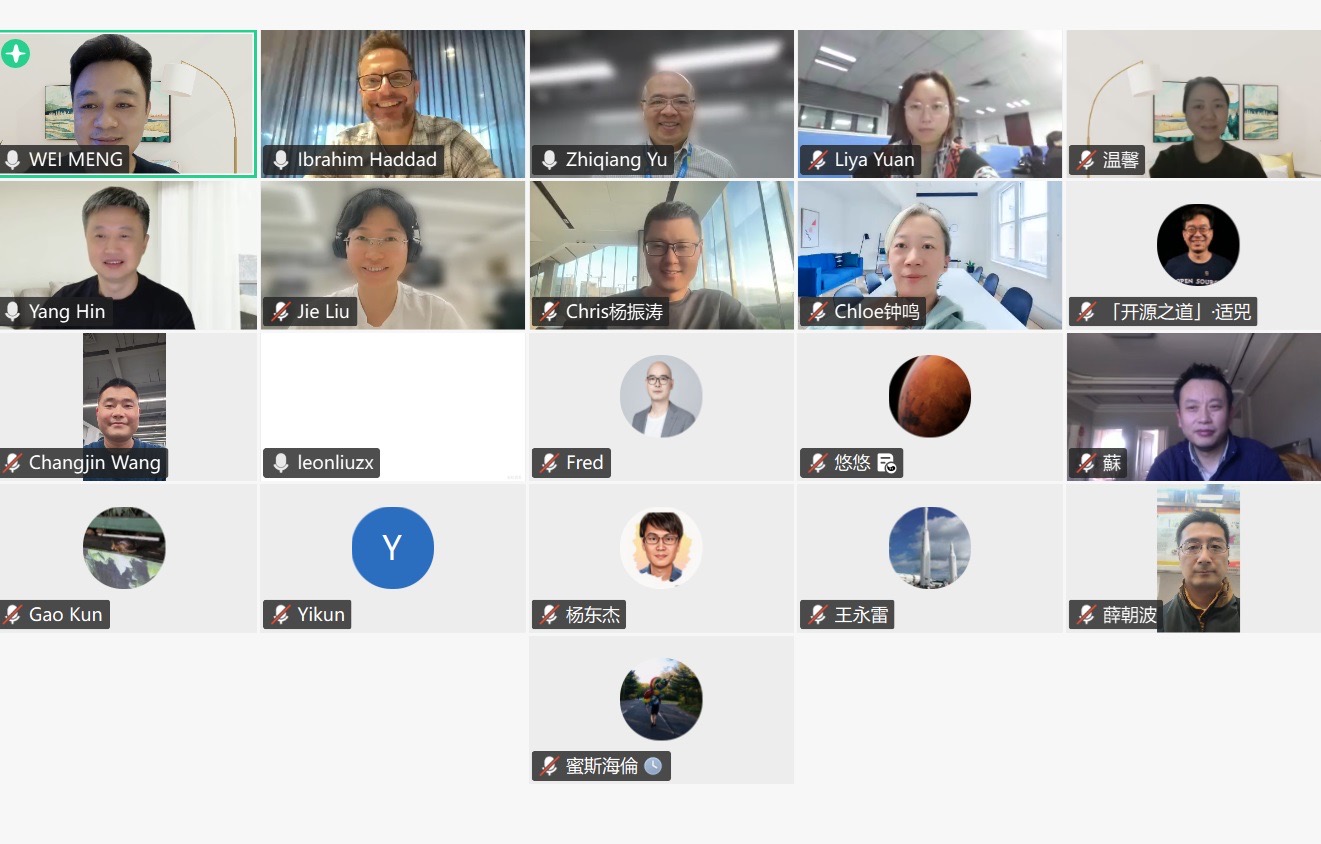
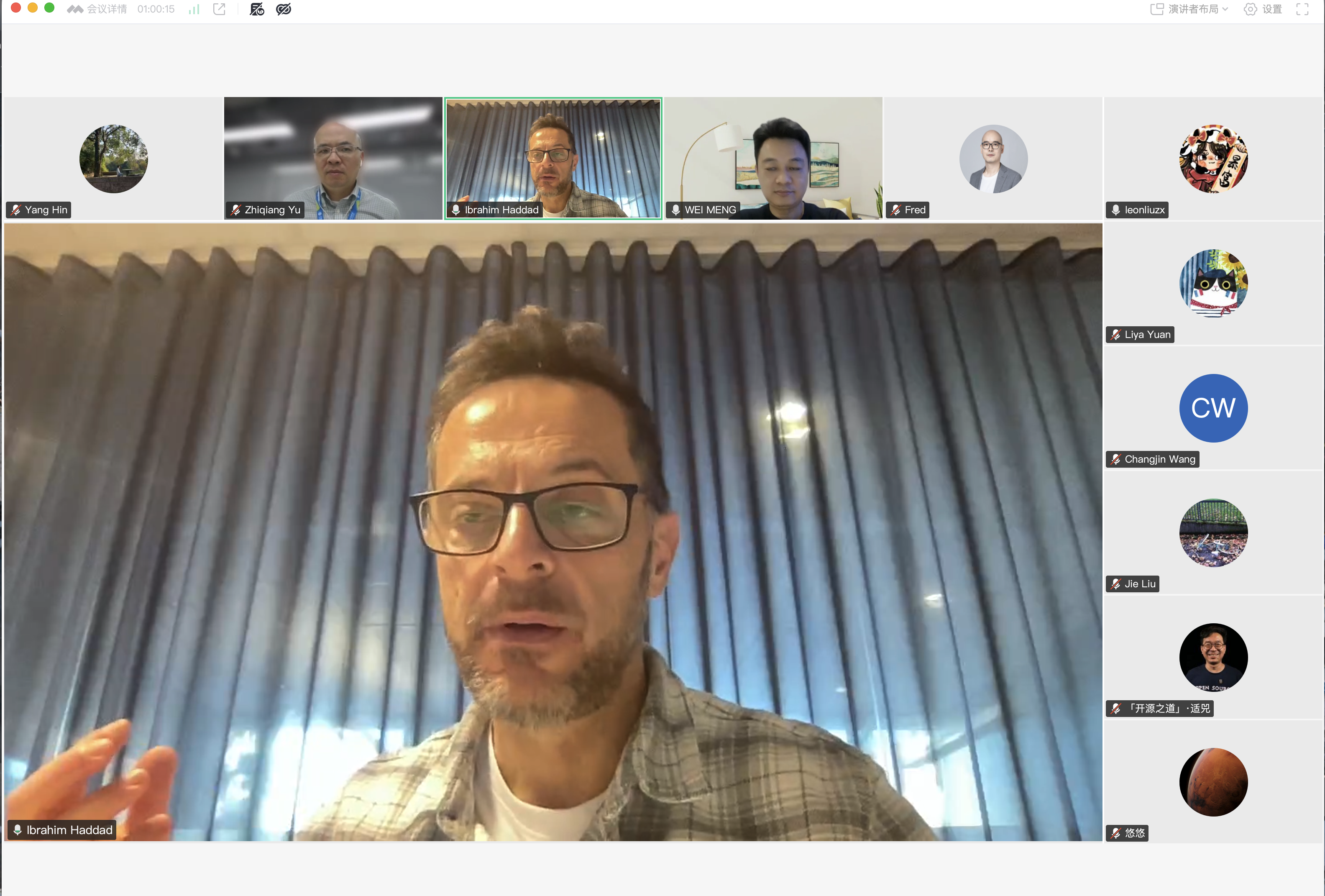
On November 4, 2026, the TODO Group China Community hosted an engaging online workshop featuring Dr. Ibrahim Haddad. Titled “Examining the AI Stack Through a Margin Lens,” the session brought together OSPO leaders and open-source practitioners across China to explore a critical, yet often overlooked, economic question: When a well-capitalized firm funds an open-source layer, how does that investment function as a strategic pricing decision?
Moving beyond the usual technical hype, Dr. Ibrahim offered an analytical framework showing how open source, standardization, and commoditization systematically reshape where companies create and capture value across the AI stack.
Key Takeaways from the Workshop
1. The Core Mechanism: Open a Layer, Move the Margin
Drawing parallels to historical shifts like Linux (2000–2001) and Android (2005–2008), Dr. Ibrahim illustrated how opening a specific layer of the software stack drives its price toward zero, causing the profit margin to relocate outward to adjacent layers.
- Historical Precedent: IBM’s billion-dollar backing of Linux moved value toward hardware, middleware, and services. Similarly, Google open-sourcing Android and Kubernetes made mobile operating systems and container orchestration free and interchangeable, while driving massive demand for app distribution and cloud compute.
- The AI Application: In AI, as foundational layers (such as frameworks and serving engines) standardize under neutral governance, value shifts either down to the physical infrastructure (chips and power) or up to user-facing workflows and applications.
2. The 7 Layers of the AI Stack & Their Current State
The presentation broke down the AI stack into seven distinct layers, noting that each sits at a vastly different stage of maturity:
- Layers 1 - 2 (Chip, Hardware, Cloud & Infrastructure): Driven by massive capital expenditures (projected at ~$725B for leading hyperscalers in 2026), AI compute remains supply-constrained with strong pricing power, while generic compute commoditizes.
- Layers 3 - 4 & 6 (Frameworks, Serving/Inference, and Agentic Protocols): Highly standardized. Technologies like PyTorch, vLLM, SGLang, and the Model Context Protocol (MCP) have largely settled under neutral foundations (such as the Linux Foundation and Agentic AI Foundation). Competing here on software pricing is a losing battle; active participation brings early information and agenda influence, while durable margins live elsewhere.
- Layer 5 (Models): A contested middle. While open-weight models (such as Llama, Mistral, Qwen, and DeepSeek) compress the middle by closing the capability gap on many tasks, premium pricing still holds at the proprietary frontier.
- Layer 7 (Applications): Fragmented yet rapidly forming, where the ultimate priceable good is the enterprise workflow—with coding assistants currently leading as the clearest durable use case.
3. Three Readings of the AI Stack
Dr. Ibrahim presented three lenses through which organizations can interpret the current AI market:
- Compute Sink: Upper-layer openings turn directly into insatiable demand for underlying compute and infrastructure.
- Barbell Shape: Value concentrates strictly at the bottom (scarce, massive compute) and the top (user-owning applications), squeezing the standardized middle.
- No Equilibrium Yet: Competitive pressure exists at every layer, meaning strategies must remain flexible because the final market structure is still unresolved.
4. A Special Focus on the China Ecosystem
A highlight of the discussion for our local community was the China Case. With deep open-source adoption and domestic AI leaders actively releasing open-weight models (compressing the middle layer), the cost of the software stack approaches zero.
Consequently, differentiation cannot rely solely on the model itself. Instead, value compresses deeply into China’s physical layer and manufacturing capabilities—spanning robotics, drones, smart vehicles, industrial equipment, and robust supply chains. When free software becomes the consensus, competition shifts to the physical carriers that embed AI into real-world products.
Strategic Recommendations for OSPO Leaders
Regardless of which reading of the stack an organization subscribes to, Dr. Ibrahim shared three actionable rules for enterprise and OSPO strategy:
- Treat AI Stack Decisions as Strategic: Route open-source consumption and contribution decisions through the same strategic review used for pricing, partnerships, and M&A—they carry multi-year consequences.
- Don’t Compete on Settled Layers: On standardizing or neutrally governed layers, contribute to gain influence and early insights, but look elsewhere for sustainable margins.
- Preserve Flexibility: In a market where equilibrium is not yet legible, favor participation over ownership and flexible commitments over rigid, long-term locks.
Closing Thoughts
As AI continues to rewrite the rules of value creation and capture, OSPO leaders must map their organizations’ exact positions within the tech stack and ask three critical questions: Which layer are we monetizing? Who else wants that layer to be free? And are we in the room where that strategic decision is made?
A huge thank you to Dr. Ibrahim Haddad for joining the TODO Group China Community online workshop and sharing his research with our members. If you would like to read the full report, feel free to reach out to Dr. Ibrahim directly!
Want to get involved in future TODO Group China Community discussions and workshops? Join us on the TODO Group Slack or visit our community hub to connect with OSPO peers across the region.